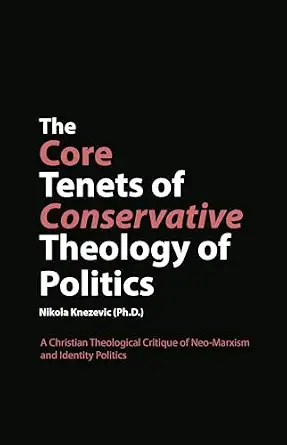
NIKOLA KNEZEVIC (Ph.D.)

Scholar in Political Theology, Author, and Documentary cinematographer

Nikola Knezevic (Ph.D., Protestant Theological Seminary, Novi Sad, Serbia, M.Th., Evangelical Theological Seminary, Osijek, Croatia) is the founder and former president of Centre for the Study of Religion, Politics, and Society in Serbia. Author of several books and co-author of many conference proceedings and articles with the Media Department of the University of Novi Sad, Serbia. Published numerous articles in Serbian daily newspapers, like Danas, Vreme, Novosti, and Borba. He directed two feature-length documentaries on memories, war, and religion in ex-Yugoslavia. In 2017 he moved with his family to the United States where transitioned back to Information Technology and excelled in various Senior and Lead Software Engineering positions in the corporate industry. Still, he actively works on publishing new articles and just published his new book: Towards the Radical Political Theology available on Amazon. He lives and works in Los Angeles, California.

Major research interests: political theology, politics, conservative politics and religion.

Follow me on my social channels: TikTok, YouTube, Instagram

Latest Articles

Feb 5, 2026theology

Nihilistic pathos of liberal, progressive, and identity theologies.

Radical political theology stands with Radical Orthodoxy in the assertion that the theological capitulation to modernity, which originated most clearly in liberal Protestantism, has hollowed out the Church’s capacity to speak prophetically to culture. John Milbank captures this diagnosis with stark clarity: “Secular modernity is the creation of a perverse theology.”[1] In his reading, liberal theology did not merely accommodate modernity’s categories; it provided the theological scaffolding upon which secular culture was constructed. Rather than challenging the epistemological and moral assumptions of the Enlightenment, liberal theology baptized them, thereby facilitating the displacement of divine revelation with human-centered reason and sentiment.

Jan 17, 2025religion & politics

The case against the de-judaization of Christianity and Supersessionism

Christianity cannot be separated from its Jewish roots; rather, it is the fulfillment of a distinctly Jewish story. The Christian faith is grounded in the covenant God made with Israel, beginning with Abraham and unfolding through the Law, the prophets, and the worshiping life of Israel. Jesus himself was a Jew, born under the Jewish Law, formed by synagogue worship, and understood by his earliest followers as the Jewish Messiah. The very title ‘Christ’ (Messiah) has meaning only within Jewish messianic expectations, and the Christian claim about Jesus presupposes the reality of Israel’s covenantal history.